
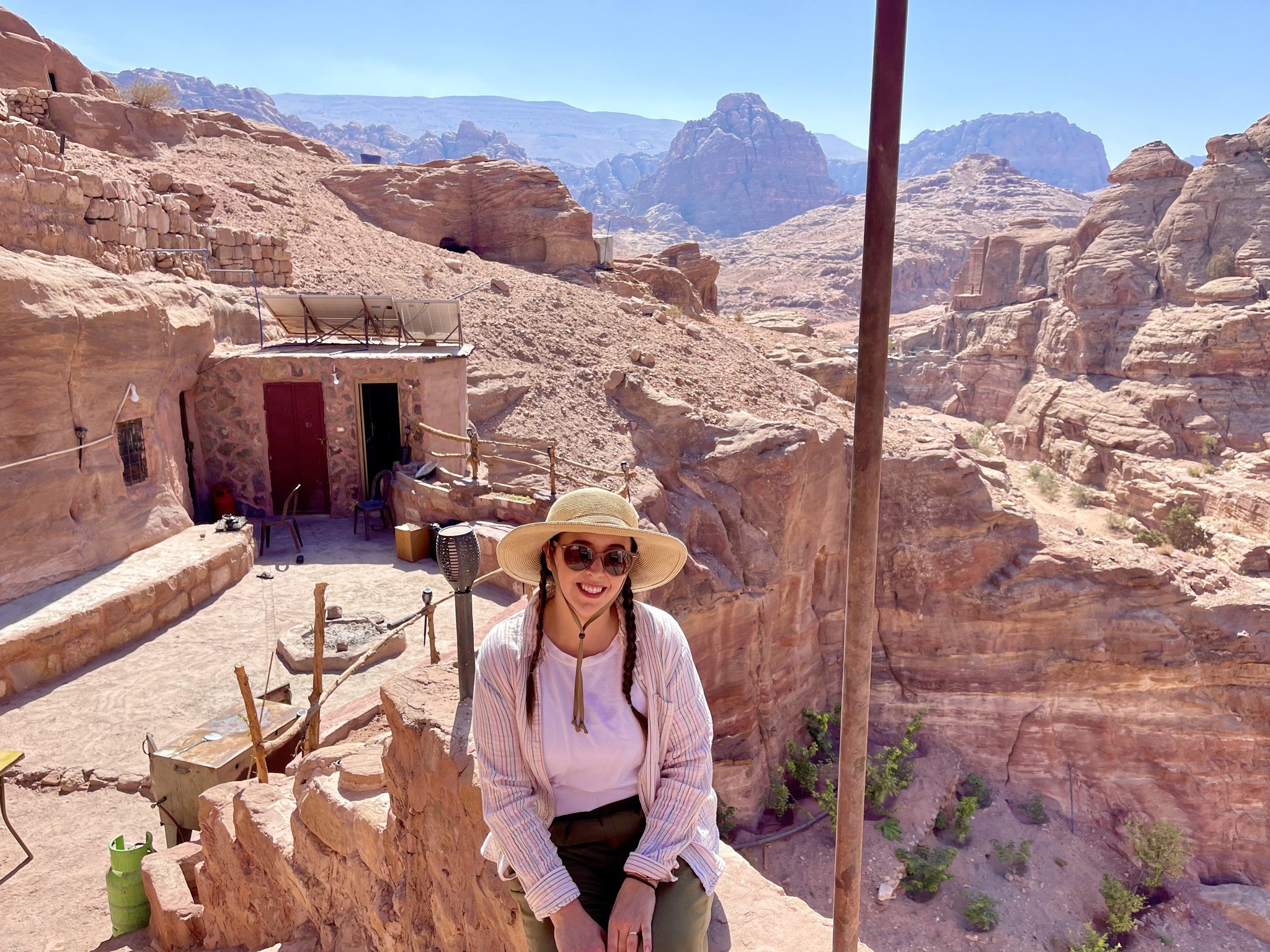
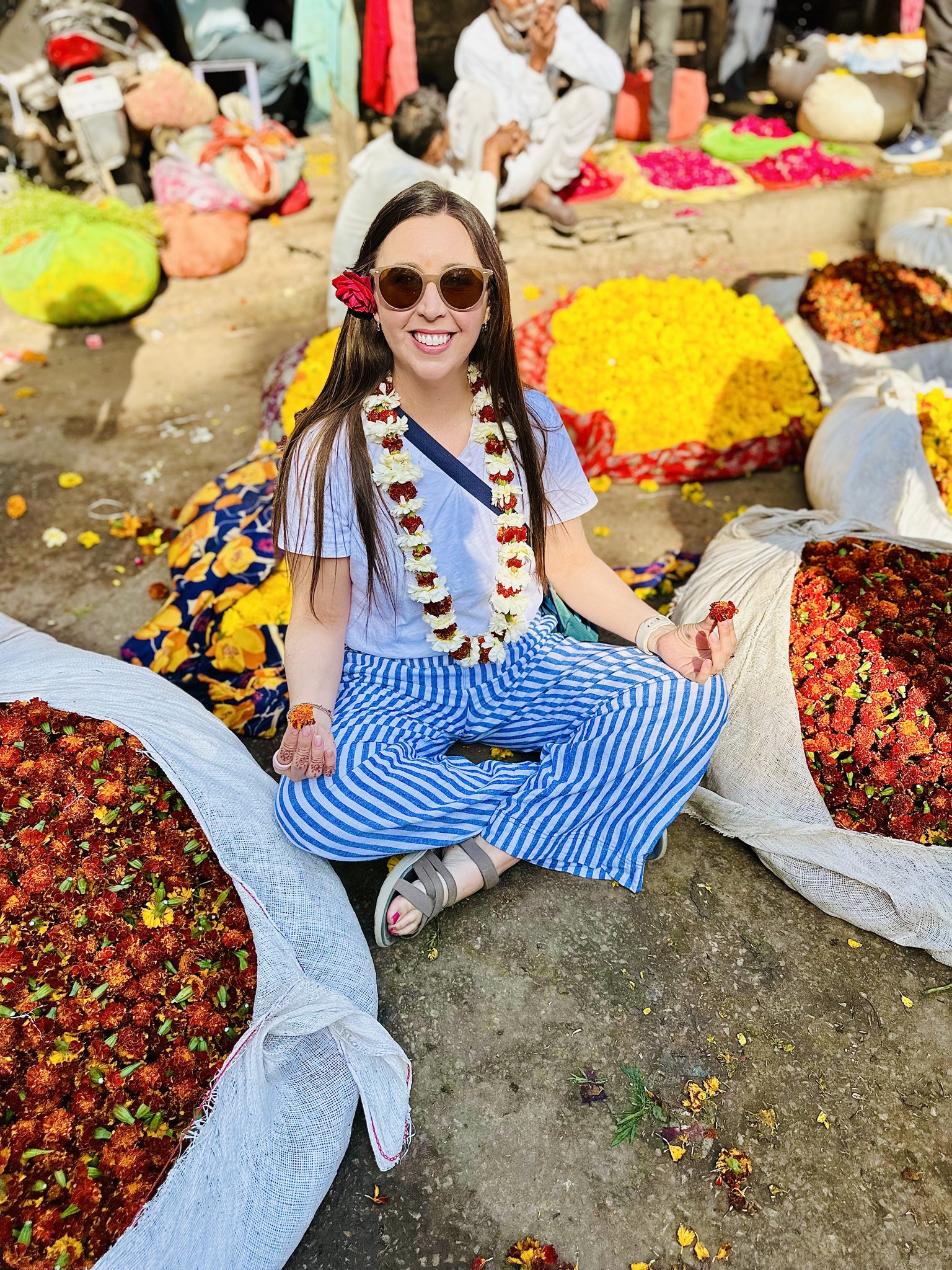
Let me paint you a picture. You’ve saved up for months, maybe years, for a big international trip. You’re finally there. The food is incredible, the views are unreal, and then… you spend three days in your hotel bathroom wishing someone would just put you out of your misery. I’ve been there. More than once. On more than one continent, if we’re being honest. Just check out the pictures below.
I’m always so careful, brush my teeth with bottled water, try not to eat street food, only eat cooked vegetables, etc. Listen, I know all the rules, and somehow still tend to get sick. The first time was rough and I was not prepared, but I have since learned my lesson and bring all the meds I need to recover FAST! I hope this list will help you too if you ever need it!
After years of traveling all over the world, from the desert in the middle east to the Scottish Highlands to the islands of Asia, I’ve learned some hard lessons about what to pack in my med kit. Not the “oh just grab some Advil” advice. I’m talking the real stuff. The stuff that has actually saved my trips.
First, A Word About Prescription Meds
Several of the items on this list require a prescription, which means you need to have a conversation with your doctor before you travel, ideally at least a few weeks out. Most travel-savvy physicians are very familiar with these medications and happy to prescribe them for international travel. If your regular doctor isn’t sure, look into seeing a travel medicine specialist. It is absolutely worth it.
Now, let’s get into it.

The Prescription Essentials
1. Ciprofloxacin (Antibiotic)
This is the big one. Ciprofloxacin is an antibiotic used to treat bacterial infections, specifically the kind you pick up from contaminated food or water. And yes, I have needed this on almost every continent. I am not proud of this fact, but I am very glad I had it every single time.
I want to be clear though: this is not for a little bit of travelers’ diarrhea or a mild upset stomach. This is for serious sickness. We’re talking fever, vomiting, can’t keep a single thing down, completely knocked flat kind of sick. When you hit that level, you don’t want to be scrambling to find a doctor in a foreign country who speaks your language. You want to already have what you need.
Talk to your doctor, get the prescription, pack it, and really hope you never have to use it. But be very glad it’s there if you do.
2. Ondansetron / Zofran (Anti-Nausea)
These little tablets have saved my bacon more times than I can count. Ondansetron (brand name Zofran) is an anti-nausea medication that dissolves under your tongue, and it is nothing short of miraculous when you’re sick and need to actually function.
Here’s the thing about getting sick while traveling: you often don’t have the luxury of just lying in bed for a week. You might be mid-trip. You might have a long-haul flight the next morning. You might be in the middle of the Amazon Rainforest with a group of people counting on you. Zofran lets you keep moving while the antibiotics do their work.
One very important note, speaking from deeply personal experience: do not take too many of these. They will make you constipated. You’ll trade one miserable problem for another. Consider yourself warned.
3. Atovaquone-Proguanil (Anti-Malarial)
If you are traveling to any region where malaria is present, including parts of Africa, Central and South America, and Southeast Asia, you need to talk to your doctor about anti-malarial medication. Full stop. This is not optional.
I’ll be spending several days in the Amazon Rainforest on an upcoming trip, so this one is an absolute necessity for me. The protocol is pretty simple: you start taking the pills several days before you arrive, continue while you’re there, and keep taking them for a few days after you leave. It’s a small inconvenience to protect yourself against a genuinely dangerous disease.
Ain’t nobody got time for malaria.
4. Acetazolamide (Altitude Sickness)
I’m adding this one to my kit for the first time ahead of a trip to Peru, and I’ll report back on how it goes! Acetazolamide helps your body adjust to high altitudes and can prevent or reduce the symptoms of altitude sickness: headaches, nausea, fatigue, and that general feeling of being completely miserable.
I’ve experienced altitude sickness before without medication and it is genuinely awful. When you’re trying to explore Machu Picchu or Cusco, the last thing you want is to feel like you’re moving through wet cement with a pounding headache. I’d rather not find out what happens without the meds again.

The Over-the-Counter Essentials
5. Imodium (Anti-Diarrheal)
Because nobody, and I mean nobody, wants to deal with that situation while hiking ancient Incan ruins at 8,000 feet above sea level. Pack it. Use it if you need it. No further explanation required.
6. Advil / Ibuprofen
A classic for a reason. Long travel days, new beds, hours of walking on cobblestones: your body takes a beating when you travel. Advil handles headaches, aches, pains, and minor fevers. Never leave home without it.
7. Electrolytes
This one is underrated, honestly. Staying hydrated while traveling is harder than it sounds. You’re in a different climate, probably walking way more than usual, possibly at altitude, and if you do get sick, you’re losing fluids fast. I toss a few packets of electrolytes into my bag every single trip. They take up almost no space and they make a real difference. I like these ones.
8. Melatonin
Jet lag is real, and it can genuinely steal the first couple days of a trip if you don’t manage it. Melatonin helps reset your sleep cycle when you’re crossing multiple time zones. Take it at your destination’s bedtime for the first few nights and you’ll thank yourself later.
9. Probiotics
Your gut is going to be dealing with a lot of new things when you travel: different water, different foods, different bacteria in the environment. Starting probiotics a few days before you leave gives your digestive system a fighting chance. Think of it as reinforcing the troops before the battle begins.
10. Allergy Meds
This one feels almost too obvious to mention, but I cannot tell you how many people forget it. If you have any allergies at all, pack your meds. Full stop. Even if your allergies are mild at home, a new country means new pollen, new plants, new dust, new everything, and your immune system does not always handle that gracefully. I have had perfectly manageable allergies turn into a full-on miserable situation the moment I landed somewhere new. Did you know I am allergic to Amsterdam?? Who would have thought. Antihistamines like Zyrtec or Claritin are small, cheap, and take up almost no space in your bag. If you have a history of more serious allergic reactions, please talk to your doctor before you travel and consider carrying an EpiPen. Do not leave that one to chance.
A Few Final Tips
See a travel medicine doctor before any international trip. They can review your specific destination, recommend vaccinations, and prescribe the medications you might need. It’s one of the best pre-trip investments you can make.
Keep your meds in your carry-on. Always. Never, ever check them. Bags get lost. Your health doesn’t have to go with them.
Label everything. If you’re traveling internationally, having a note from your doctor, especially for prescription medications, can save you a lot of headaches at customs.
Travel is one of the greatest gifts we can give ourselves, but it does come with real risks. A little preparation goes a long way. Pack your kit, talk to your doctor, and then go enjoy every single second of your adventure, healthy and ready for whatever comes your way.
Have questions about travel prep? Drop them in the comments below. I love hearing from fellow adventurers!
xo, Vanessa
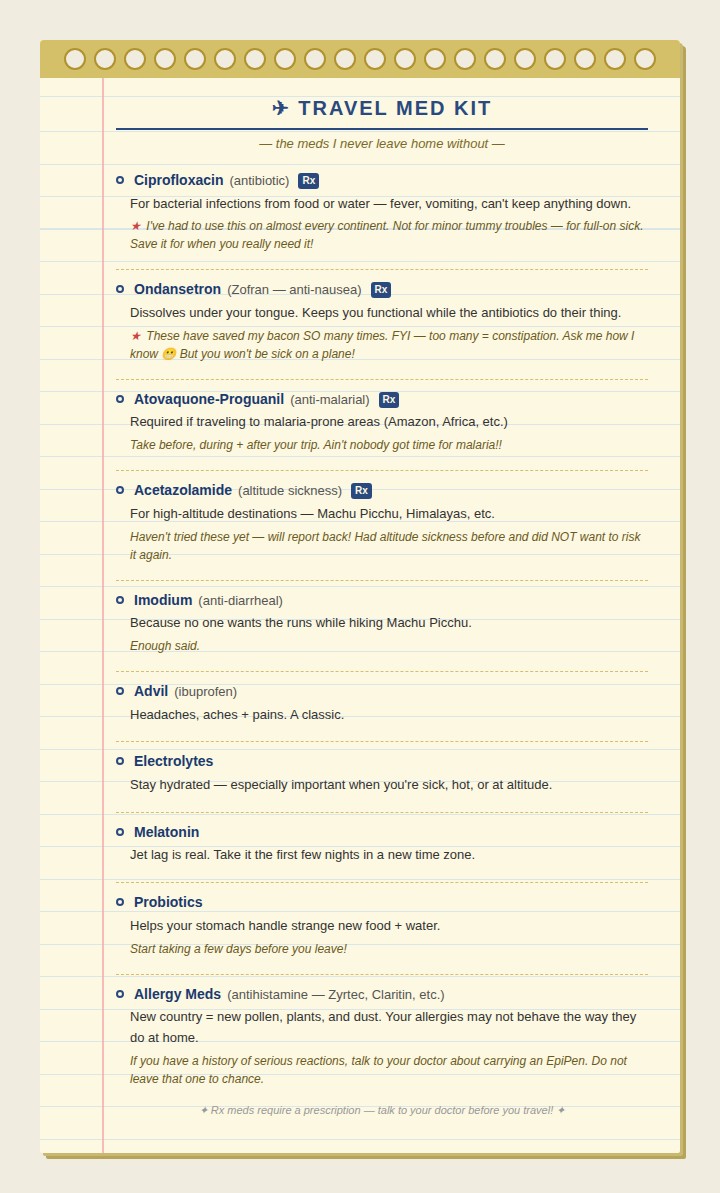
PS- You can download this image to have on hand when you talk to your doctor…
Disclaimer: I am not a medical professional. Everything in this post is based on my own personal travel experience. Please consult your doctor or a travel medicine specialist before taking any prescription medications or making decisions about your health.
